

The country’s story goes much deeper, buried in its forests and fields. For hundreds of years, Sweden ran the show. Swedish laws, language, and religion shaped daily life. Then Russia took over after the Finnish War, throwing the region into political upheaval and setting off a search for a new Finnish identity.
Finland didn’t have a single royal family steering its future. Ordinary people had to adjust to new powers and find ways to hold on to their heritage. Sometimes it meant blending influences—sometimes it meant holding tight to language, folklore, or traditions just to survive.
The early Finnish history of the medieval period is difficult to separate from the wider history of the Baltic and Nordic regions. Long before Sweden took charge, the land was dotted with small communities, each with its own way of life and local customs.
Go back to the 12th and 13th centuries, and you’ll see Sweden expanding east. With them came Christianity, the founding of cities like Turku, and a new system of laws and government.
It wasn’t just military conquest—trade started booming, new settlements grew, and the region got more connected with the rest of the Swedish kingdom.
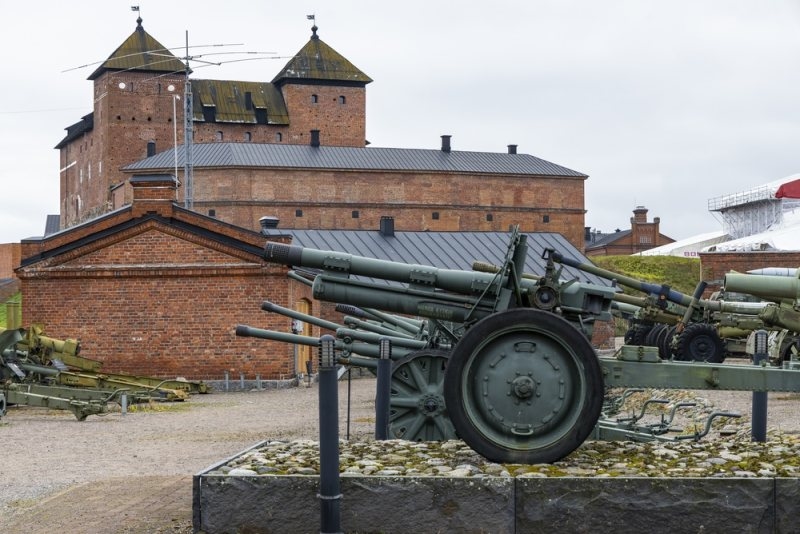
Finland wasn’t an independent country then; it was part of Sweden. Castles like Turku, Häme, and Olavinlinna sprang up, symbols of both royal power and a constant readiness for conflict.
Still, for most people, life was grounded in farming, faith, local networks, and trading. Royal authority mattered, but everyday life coexisted with it. That balance is important when reading Finnish history.
A useful Finland history timeline shows how often political control shifted while local society continued developing.
| Period | Major Development | Why It Mattered |
|---|---|---|
| 12th–13th centuries | Swedish rule expands | Christianity and Swedish institutions spread |
| 1520s | Reformation reaches Finland | Religious and administrative life changes |
| 1700s | Russo-Swedish wars | Finland becomes a major frontier |
| 1808–1809 | Finnish War | Sweden loses Finland to Russia |
| 1809–1917 | Grand Duchy of Finland | Finnish autonomy develops under Russia |
| 1917 | Independence | Finland becomes a sovereign state |
| 1939–1945 | Winter War and Continuation War | Borders and national identity are reshaped |
The Finland historical events in this table show a recurring pattern. Finland was often caught between stronger neighbors, yet each period also strengthened institutions that later supported independence.
The Great Northern War brought severe disruption in the early 18th century. During the Greater Wrath, when Russia occupied the region, violence, hunger, and chaos tore through the land.
Yet, the Finnish sense of self isn’t just about what king or empire was in charge. It comes alive through language and folklore. Language, songs, oral traditions, food, forests, architecture, and seasonal Finnish customs helped preserve a distinct cultural identity.
The 19th-century publication of the Kalevala—Elias Lonnrot's great compilation and reimagining of old oral poetry—turned tradition into a national epic. It didn’t invent Finnish culture from thin air; it gave voice to what was already there.
The Kalevala rippled out, shaping art, literature, music, and how Finnish culture imagine themselves even today.
The Finnish language itself grew stronger in the 1800s. It’s much more about daily life: the language spoken in schools, the newspapers, the way people connected through books and public life.
This part of Finnish history matters because nationalism was not built only through political speeches.
The most important Finland historical events of the 19th century began with the Finnish War of 1808–1809. Sweden was defeated by Russia. Finland was separated from Sweden and became an autonomous Grand Duchy within the Russian Empire.
Russian rule complicated things. Finland had to deal with Moscow’s grip, but still kept its own laws, religion, and institutions for the most part. In 1812, Helsinki took over from Turku as the capital—another big shift.
This autonomy gave Finnish institutions room to develop. That contradiction sits at the heart of Finnish history.
That bond only got stronger in the late 1800s and early 1900s, as Finnish nationalism really took hold. At the same time, Russian crackdowns led to bitter fights over Finland’s right to self-rule.
The Russian Revolution of 1917 transformed the political situation. Finland declared independence on December 6, 1917. But independence did not immediately bring stability.
The next chapter of Finnish history was violent. Finland entered a civil war in 1918 between the Reds and Whites. Independence brought its own pain. A brutal civil war split the country, and even though the White side won, wounds ran deep for years.
In 1939 came the Soviet attack, the beginning of the Winter War. Despite being outnumbered and outgunned, the Finns still lasted longer than expected. They suffered land losses and were forced to accept harsh peace conditions, but this defiant act became an integral part of their country's history.
After the war? It was tough going. Finland lost territory, owed big debts, and needed to rebuild almost everything. Still, Finland got back on its feet.
Finland later fought the Soviet Union again during the Continuation War, beginning in 1941. Finland eventually sought peace in 1944. Yet Finland rebuilt its economy and institutions rather than remaining trapped by wartime destruction.
That resilience became part of modern Finnish heritage.
The later Finland history timeline is less dramatic militarily but equally important socially. After the Second World War, Finland industrialized rapidly. Agriculture shrank as cities grew. Schools got better, the welfare system grew, and everyday life improved.
Finland's problems throughout the Cold War were maintaining independence and relations with the Soviet Union. Not easy, but somehow, the country managed to build a steady democracy and a solid economy. When the Soviet Union collapsed in 1991, it hit Finland hard, but the country bounced back again.
Finland responded with major structural changes. Joining the European Union in 1995 marked another important shift in its international position.
Modern Finnish history therefore includes more than wars. It covers: education, technology, welfare policy, urbanization and changing relationship with Europe.
Modern Finnish heritage remains visible in ordinary life. Traditions stayed strong. Even now, you see traces of the past everywhere—from sauna traditions and design, to both Swedish and Finnish languages, and a real connection to forests and lakes.
The country changed dramatically, but not everything was discarded. That is perhaps the clearest lesson from Finnish history.
The identity of Finland was shaped by adapting. When Swedish rule ended, its institutions and influences were left. Autonomy in an empire was promoted by the rule of the Russians. However, what is it that peoples the essence of being Finnish? It is still an outcome of a struggle, creativity, and resilience that has gone on for centuries.
The Finnish story is about borderlands slowly turning into a nation. Medieval Swedish rule, Russian control, passionate nationalism, independence, civil war—each left its mark. You can’t separate these chapters—they all help explain how Finland ended up with its distinct political system, cultural confidence, and fierce independence.
The stuff that defines Finland today—its language, resilience, even love of nature—came from years of survival and rebuilding. Wars tested the country but also pushed communities to organize, educate, and find common identity. Finland’s sense of self wasn’t handed down; it was built, layer by layer, through tough times and ordinary life.
That’d be Turku. It goes way back to medieval times. Under Swedish rule, Turku was a major center for religion, trade, and local government, long before Helsinki took over as the capital.
That happened in 1812, after Russia took control of Finland from Sweden. Placing the capital in Helsinki—on the southern coast—fit Russia’s strategic plans and took some political weight away from Turku.
Finland has two national languages: Finnish and Swedish. Most Finns speak Finnish, but Swedish is still important, especially along the coast and in the Aland Islands.
It’s not just history—think endless forests, thousands of lakes, a love for sauna, bold design, great schools, and high-tech innovation. Nature isn’t just scenery here; it’s a big part of what makes Finland, well, Finland.
Finland became independent from Russia in 1917. A few years later, in 1919, the country set up its republican constitution and elected a president as head of state. Thus was today's Finland formed, from past struggles and new concepts, and from the will to create something from scratch.
This content was created by AI